
Each Seventh Month, the Zhong Yuan prayer services at Nirvana Memorial Garden Singapore are marked by more than chanting and incense. In the ceremony hall on Level 9 of Block B, a set of large paper structures is raised for the duration of the rites. To a family visiting for the first time they can look like festival decorations. In fact, each one is a symbolic offering with a specific spiritual purpose, prepared for souls who may have no one else to remember them. This article explains the three most important of them: 同归所 Tong Gui Suo, 寒林院 Han Lin Yuan, and 法船 Fa Chuan, the Dharma Boat.
Why Symbolic Offerings Are Prepared for Zhong Yuan
In Chinese tradition, the seventh lunar month is the season when the gates between the living and the departed are believed to open. Alongside a family's own ancestors, many souls with no one to make offerings for them are thought to wander. The Zhong Yuan deliverance ceremony (超度法会) therefore carries two intentions at once: blessings for one's own forebears, and compassionate care for the departed who have no descendants to remember them.
Paper offerings are the medium for that intention. In folk belief, a paper object that has been consecrated by the officiating clergy and then burned is transformed into something the departed can actually use. A paper house is therefore not a model but a real place of temporary rest, and a paper boat is a real vessel. At Nirvana's prayer services, these communal offerings are prepared by the ceremony itself, so families do not need to arrange them.
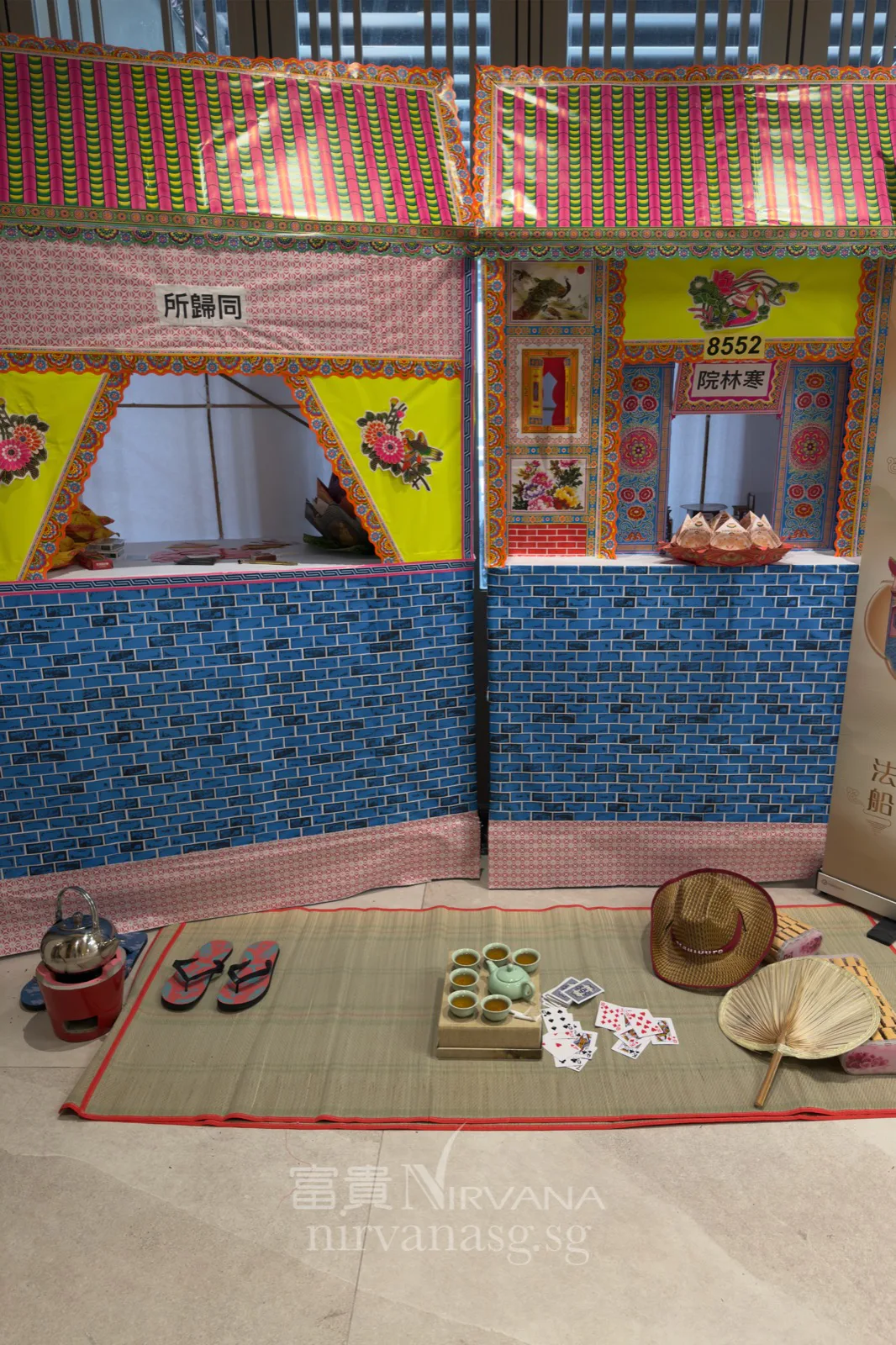
同归所 Tong Gui Suo: Shelter for the Wandering Souls of the Common People
The name means, roughly, "the place to which all return". Tong Gui Suo is a symbolic paper house prepared as a temporary shelter for the wandering and unclaimed souls of ordinary people. Incense and food offerings are presented to these spirits throughout the prayer services, expressing care and compassion for those who may have no descendants left to remember them.
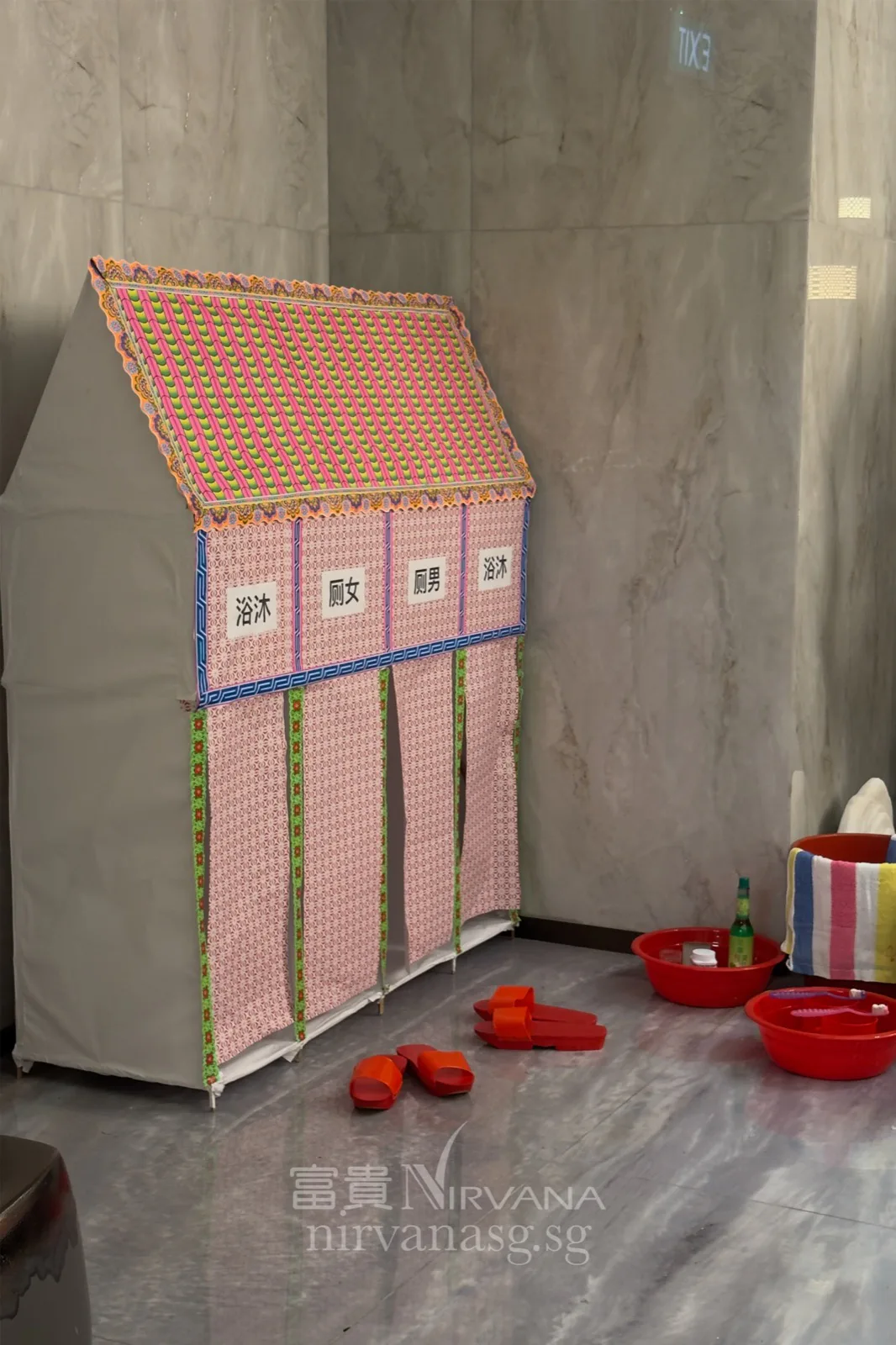
Look closely and the arrangement is strikingly domestic. Door curtains are labelled for bathing (浴沐), the chambers are divided into men's and women's quarters (厢男 and 厢女), and in front of the house sit wash basins, slippers, a tea set, and even a straw sleeping mat. The intention behind these details is hospitality: the souls are received like travellers arriving from far away, invited to wash, rest, and then eat.
寒林院 Han Lin Yuan: A Refined Dwelling for Nobles, Officials and Fallen Soldiers
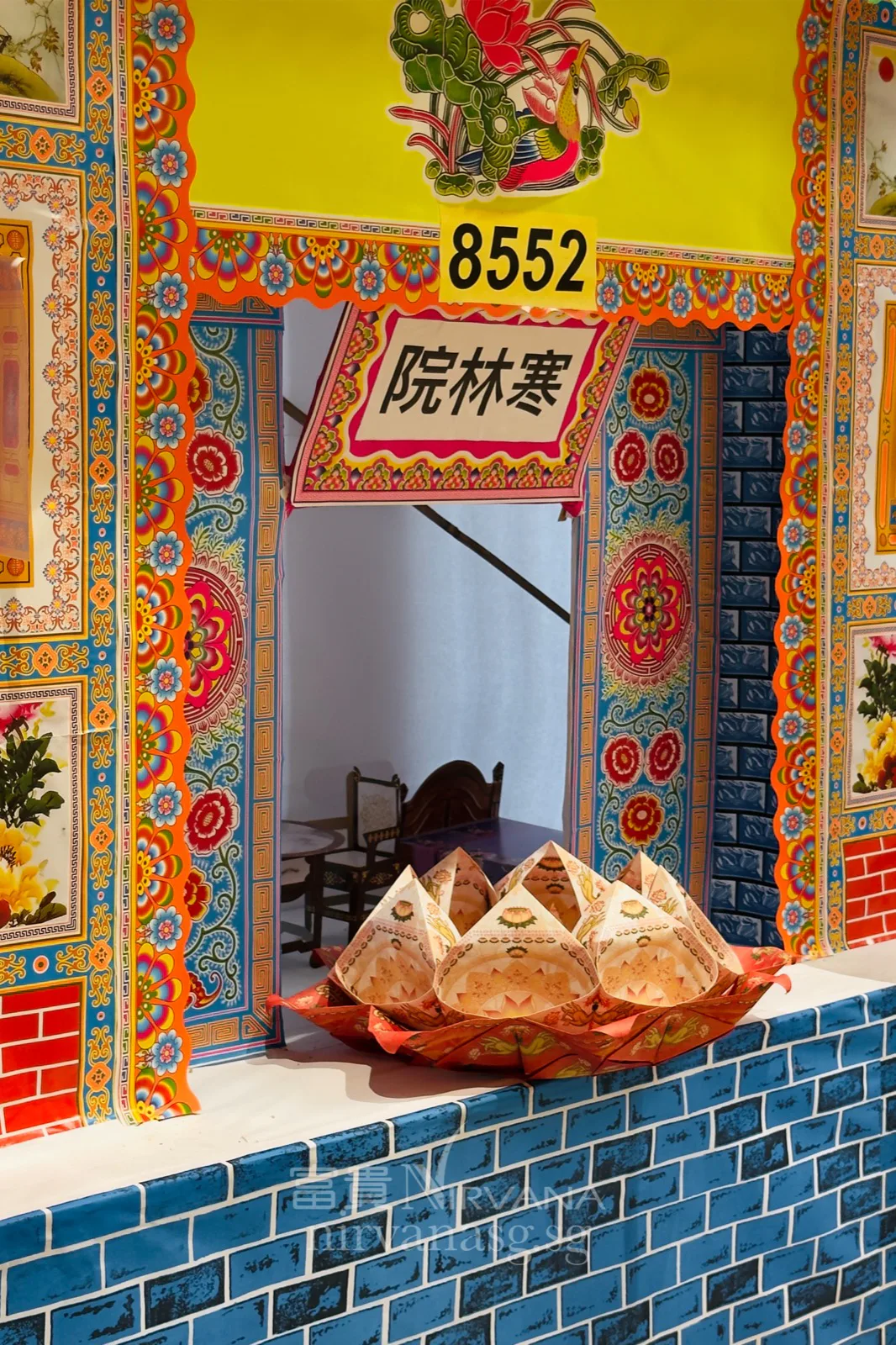
Han Lin Yuan is the second symbolic dwelling used in the prayer services, traditionally intended for the spirits of nobles, prominent families, officials, and soldiers who fell in battle. The term 寒林, "cold grove", comes from the Buddhist scriptures, where it named the cool woodland outside an ancient Indian city in which the dead were laid; in Chinese it later became a refined word for a burial ground.
Compared with Tong Gui Suo, it is usually more elaborate in design: an ornate, brightly painted doorway, decorated eaves, and carefully arranged offerings placed at its threshold. The distinction between the two houses reflects the social order of an earlier age, but the intention behind them is the same. Whatever a person's station in life, no soul is left out of the ceremony's care.
法船 Fa Chuan: The Dharma Boat
Fa Chuan, the Dharma Boat, is a large ceremonial paper boat prepared during the prayer services for the deliverance of departed souls. It is rooted in Buddhist symbolism: the Dharma is likened to a vessel that carries beings across the sea of suffering (苦海) to the far shore of peace and nirvana.
In traditional practice the boat is sent off as the ceremony draws to a close. After the merit generated by several days of chanting has been dedicated, the souls are respectfully invited to board and depart with it. The whole ceremony is named for deliverance (超度), and the Dharma Boat is the most literal image of that word: to ferry someone across to the other side.
What These Offerings Say About the Prayer Services
Taken together, the three offerings show that the Seventh Month prayer services are about more than remembrance. They are also an act of compassion. A family that comes to chant for its own ancestors is, at the same time, helping to care for the forgotten. The merit sought for one's own loved ones is dedicated to all beings alike. This reflects the Buddhist practice of dedicating merit (回向), and it is the spirit in which Nirvana Memorial Garden holds its annual deliverance ceremony: to comfort beings in the realm of suffering and help them find release and rebirth.
Questions Families Often Ask
Are the paper houses eventually burned? Yes. In the traditional practice, Tong Gui Suo, Han Lin Yuan and the Dharma Boat are respectfully sent off and burned at the conclusion of the ceremony, guided by the officiating clergy, as a sign that the souls depart carrying the merit of the rites.
Is this a Buddhist or a Taoist custom? Both. Tong Gui Suo and Han Lin Yuan belong mainly to folk practice shaped by Taoism, while the Dharma Boat comes from Buddhism. In Singapore's Chinese community the two traditions have long sat side by side, and they do so at Nirvana's ceremony as well.
Do I need to bring my own offerings? No. The communal offerings are prepared by the ceremony. Families who wish to offer incense or a simple offering for their own ancestors are welcome to, and staff on the day will guide you.
Are these offerings for my own ancestors? Tong Gui Suo, Han Lin Yuan and the Dharma Boat are communal offerings for all souls. To pray specifically for your own forebears, you can register a memorial tablet for the ceremony or arrange a separate Kong Teck merit ceremony.
Joining the 7th Month Prayer Services at Nirvana
Nirvana Memorial Garden holds its Zhong Yuan deliverance ceremony every Seventh Month on Level 9 of Block B, over several consecutive days. Families can register a tablet for their ancestors and take part in the chanting and offerings in person. Those who cannot attend may use the pray-on-behalf service, in which incense and offerings are presented on the family's behalf. For this year's dates and how to register, message us on WhatsApp at +65 8999 7708 or see our prayer services page.